
Belarusian Artist Works on Kung Fu Panda for DreamWorks
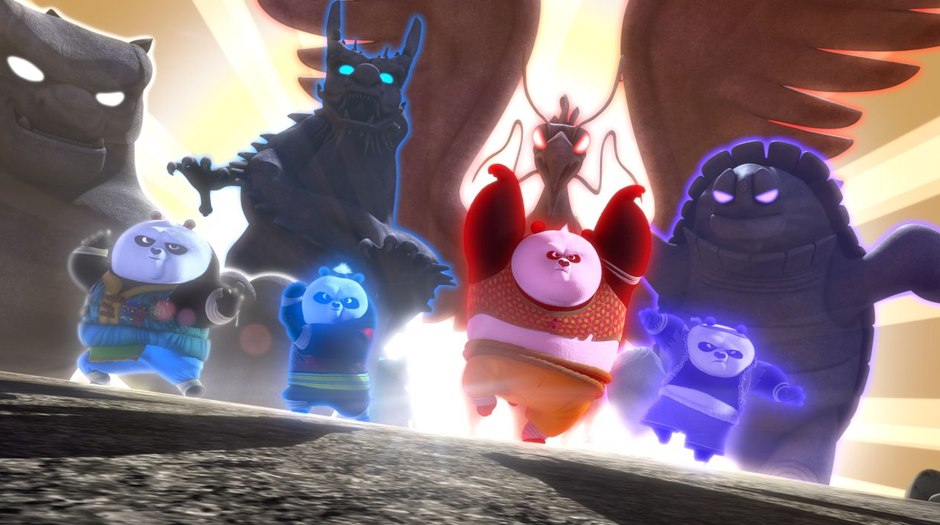
DreamWorks recently announced that it was preparing a new animated series, Kung Fu Panda: The Paws of Destiny. Among the artists who worked on the project was Belarusian artist Genadzi Buto, originally from Minsk.
Genadzi describes himself as a director, storyboard artist, animator, artist and designer, adding that these professions can be listed in any order. Many people may have seen his short film Lollipop.
HOW I GOT TO WORK ON A HOLLYWOOD PROJECT
— In the summer, the Canadian studio Bardel posted a vacancy for a storyboard artist. The position was open to applicants from anywhere, although the company preferred local artists. I wasn’t specifically looking for work in Canada, but I decided to send them my portfolio anyway. The worst that could happen was that nothing would come of it.
A few months later, in the autumn, I received an email from the studio. They liked my work and offered me a chance to collaborate. I didn’t reply straight away — I took my time a little. During the interview, it became clear that my storyboard style was a good fit for their new DreamWorks project: a new season of Kung Fu Panda.
According to the official description, it’s an adventure series produced by Mitch Watson, Elliot Owen (All Hail King Julien) and Lane Lueras (The Adventures of Puss in Boots).
The story follows four young pandas who discover a mysterious cave beneath their village and accidentally absorb chi energy. They soon realise they’re destined to save the world from an evil force. Po the panda has to help them master their new powers.
Production is split between two studios: Canada’s Bardel and the US-based DreamWorks. The latter handles the scripts, character, environment and prop designs, as well as the series’ 3D models.
HOW THE WORK WITH THE CANADIAN TEAM IS ORGANISED
— We receive scripts, character and environment artwork, and 3D models of the locations from the Canadian team. Sometimes we have to adjust the storyboards to fit the voice recordings if they arrive late. Other than that, the process is pretty straightforward: every stage has its own deadline, tasks are tracked in a spreadsheet, and we have regular calls with the director.
There’s an eleven-hour time difference between me and Canada. So work calls often take place late in the evening and sometimes go on well into the night. I’m a night owl, so getting used to that schedule wasn’t difficult. The only downside is having to plan my evenings around work. If you’ve got a call in a couple of hours, it’s hard to properly relax or head out somewhere.
Every episode starts with a team meeting. The storyboard artists, the director and representatives from DreamWorks all take part. You could say we’re all sitting around the same table, although in reality we’re scattered across the world: some people are in California, others in Vancouver, and I’m in Minsk.
During the meeting, we read through the script, discuss it and get feedback from the DreamWorks directors. I was amused by how casually the American colleagues behaved: they might be sitting there in baseball caps with their feet up on the table, just like in American movies. There was some swearing, too, but the atmosphere was still very friendly.
Working with American and Canadian clients, I’ve noticed a difference from what I’m used to with companies in the post-Soviet world. When a problem comes up, they try to find a practical solution rather than get into arguments or hurt someone’s ego.
I often disagreed with the director, but I tried not to argue. I decided it was better to keep my arguments to myself and simply do what I was told. He’s the director of the project, after all, so if he doesn’t ask for my opinion, I don’t butt in with my own suggestions.

HOW MUCH I EARNED
— I worked under a contract. It’s hard to say how much protection it would actually have given me if something had gone wrong. But it was a Canadian company, and Canadians are generally considered more reliable than companies back home. Besides, Bardel is a large, long-established studio that works with major companies like DreamWorks. It has no reason to cut corners over a relatively small payment to me.
By Canadian standards, I was paid at the level of a junior storyboard artist. Compared with what I’d earned before, though, it was a decent amount. It would probably have been enough for a decent car. But I’d rather spend it on a video camera — that’s what I need more right now.
If I’d kept working at that pace for a few more months, I might even have started thinking about buying an apartment. Although I’d have had to spend some of the money on medication, too (laughs).
PROCRASTINATION
— Procrastination is a real problem for anyone who works freelance. But this series was very important to me, so I just had to keep working hard while I had the chance.
After long hours at the computer, my eyes would sometimes hurt badly, and sometimes I’d get such a splitting headache that I couldn’t sleep. At times like that, art is the last thing on your mind. You can’t just take a break and leave the work until tomorrow, either. It’s tough, uncompromising work.
WHERE TO GET A GOOD EDUCATION IN ANIMATION
— That’s a difficult question (laughs). Basically, I’m self-taught, although I did study industrial design at the Belarusian Academy of Arts. My studies gave me a solid artistic foundation and taught me to think like a designer.
I became interested in animation in my final years at the academy, and I’ve been working in different forms of animation ever since. But I still feel there’s a lot I need to learn. I keep working on my drawing skills and reading books on directing. For example, in just the last two weeks I’ve read four books on the subject, two of them in English.
These days, you can learn without enrolling in an educational institution. The internet makes it possible to teach yourself almost anything, and in our part of the world, piracy makes that even easier. But you need the motivation and the ability to study on your own. Not everyone can stay organised without someone else keeping them on track — that’s what schools are there for.
Many directors and animators would agree that working on an actual project teaches you more than any school can. Studio experience gives you the kind of practical knowledge you simply can’t get from books.
Still, if you have the chance to get into a good school, I’d take it. For example, there’s CalArts in California, which has historical ties to Disney, and Gobelins in Paris, France. CalArts is very prestigious, but studying there isn’t exactly within everyone’s reach. Gobelins is more accessible in that respect, although you can only apply before the age of 26. There are other worthwhile schools, too, but that’s a story for another time.