
Animators Are Actors Nobody Ever Sees
Did you know that St. Petersburg is now the capital of animation? The city owes this title to the Petersburg computer animation studio, which created the popular animated series Kikoriki, and Melnitsa, an animation studio producing feature-length animated films and television series. Its successful projects include stories about the adventures of the Three Bogatyrs, the tale of the hapless Ivan Tsarevich, the much-loved Luntik and His Friends, and many others. In Focus takes a look at the stages involved in making an animated film and the hard work that goes into animation.
Making an animated film is a long and labor-intensive process. It begins with writing the screenplay, which is presented to the producer together with an animatic — an animated mock-up of the film, drawn schematically. It may lack artistic polish, but it conveys the basic dynamics of the story. Once the producer has approved it, a more detailed animatic is created, since the rough version is often a tangled web of lines that only the director can make sense of. The animatic’s main purpose is to show the animator exactly what kind of scene the director ultimately wants, how the character should behave in the frame, and how they should react to different events.
“We try to make the animatic as detailed and carefully thought out as possible to make life easier for the animators,” says Konstantin Feoktistov, director of The Three Bogatyrs on Distant Shores. “Our team includes animators with different levels of experience and different skill sets, and they all take part in the process. Any of them may end up creating scenes featuring the same character. Unfortunately, unlike Disney, we can’t assign one animator to a character from beginning to end. To speed things up, a character moves from one animator to another, from one scene to the next. So, to smooth out inconsistencies and avoid noticeable differences between scenes created by different animators, we produce a carefully planned and fully drawn animatic. This helps us achieve a film that feels consistent as a whole.”
Next, the layout artists come into play. They create layouts showing where the characters are positioned in relation to one another within a particular scene. This is an intermediate stage between the director’s animatic and the animator’s work. A layout is an animatic in which the positioning of the characters within the environment, along with the specific features and details of the scene, is worked out precisely. The animatic is divided into sequences, and the sequences into scenes. Layout artists take a scene from the animatic and draw it as the characters and their surroundings will appear on screen.
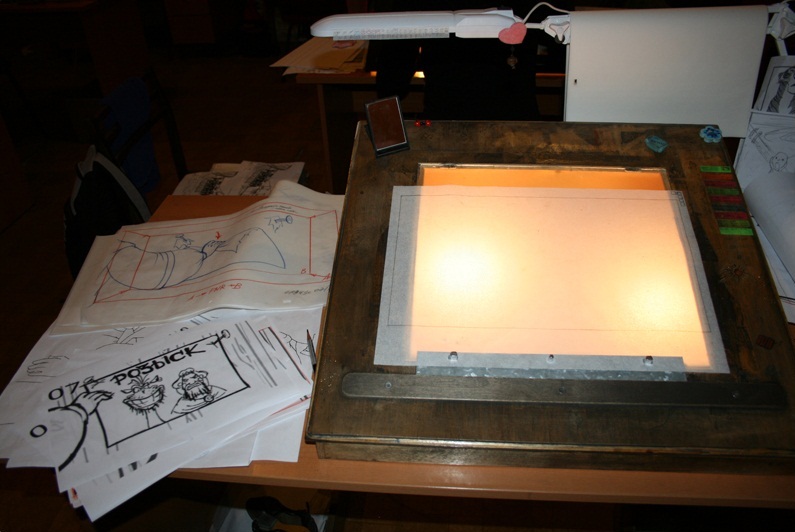
The material then goes to the animators, who draw the scenes frame by frame: one frame, one drawing; one second of animation, 25 frames. Different animators prefer different tools: some find it more convenient to work on animation paper, while others draw on a graphics tablet.
Once a scene is approved, it goes through cleanup. Shadows — both cast shadows and those on the characters themselves — are added, along with the color fills. The film is then edited, voiced, and given its music and sound effects.
More than 200 people work at Melnitsa, which is housed in the Lenfilm Science and Documentary Film Studio building. Some 85–90 percent of them are women. Still, we managed to track down two of the few men on the team — animators Andrey Myshev and Genadzi Buto — and talk to them about the demanding life of animation artists.
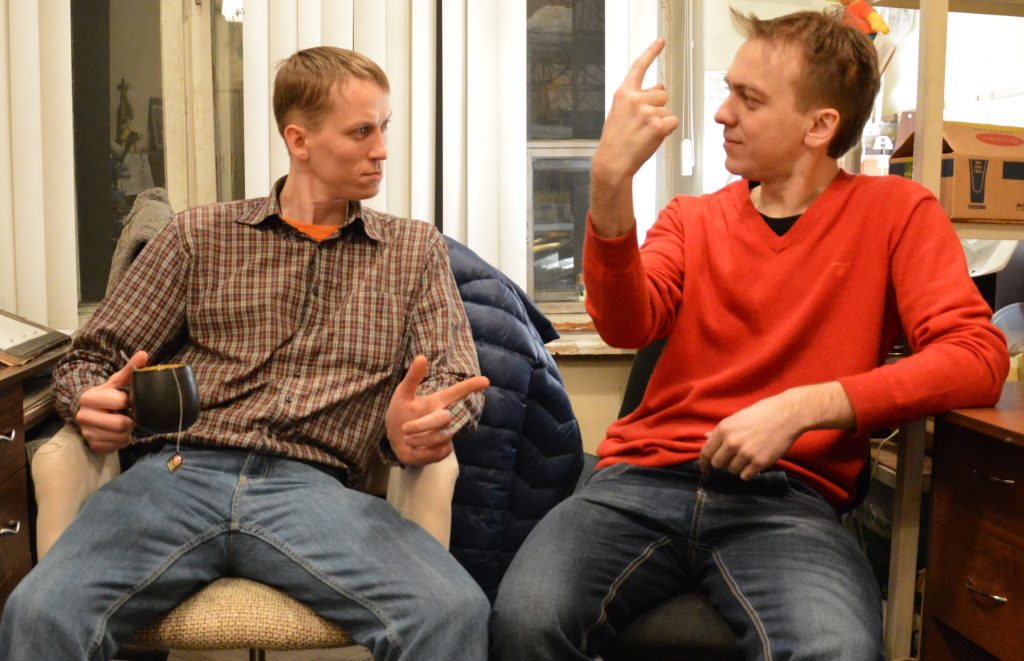
— How long have you been working at Melnitsa?
Andrey: We took Melnitsa’s training course together, starting in the autumn of last year, and then began working here. So we’ve been here for almost a year and a half. People find their way here in different ways. Some have been working here for 15 years — they transferred from the Lenfilm Science and Documentary Film Studio — while others have only just arrived and are still learning the craft of animation.
— So, tell us how you ended up at Melnitsa.
Andrey: Oh, our stories are completely different.
Genadzi: I’ve been involved in animation for quite a while, and before joining Melnitsa I’d already made five animated works. I’m originally from Belarus. I graduated from the Academy of Arts in Minsk with a degree in Industrial Design. During my final years there, I began to realize that it wasn’t for me, and started exploring animation and 3D software. I came to understand that video, animation and directing appealed to me much more. Even my graduation project — a presentation of an industrial facility — was entirely animated. After graduating, I worked as a freelancer, creating animation, commercials, music videos and visual effects for films. After five years of working independently, I happened to hear that Melnitsa was recruiting students for a 2D animation course. I’d always wanted to learn that kind of animation, so I went along and showed them my showreel. It was a compilation of my work in various styles: hand-drawn animation, computer cut-out animation, broadcast graphics, titles, effects — a bit of everything. And that’s how I became part of the Melnitsa team.
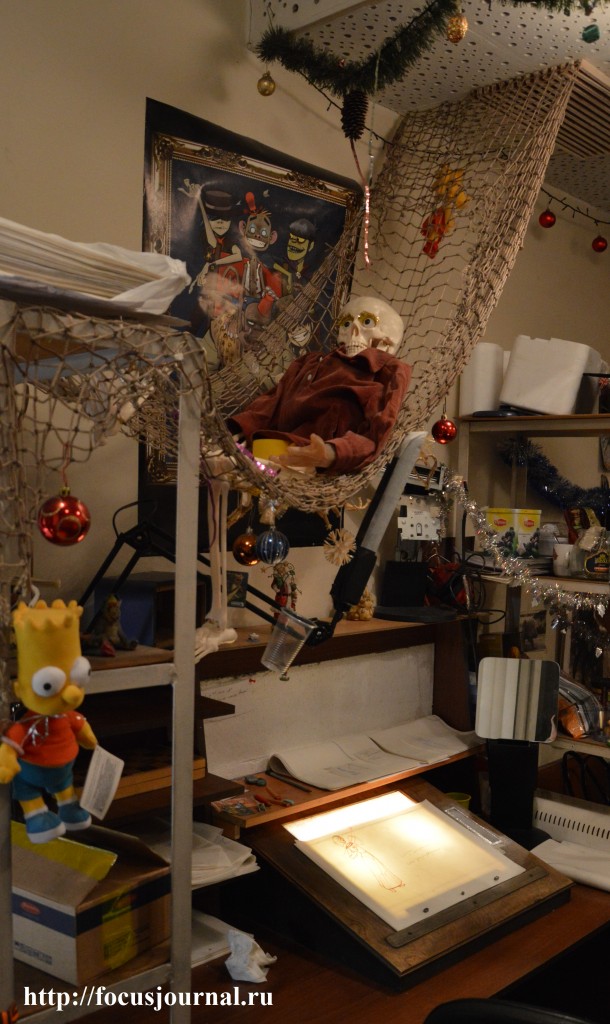
Andrey: My path was completely different. I was born in the Republic of Tatarstan, in a small town with the funny name of Tetyushi. I finished school there (11 grades), then immediately ran off to Kazan. The stagnant atmosphere of a small town was suffocating, and I desperately wanted to get out. In Kazan, I enrolled in the design department of the Kazan Art College and studied there for four years. By my second year, I’d realized that I never wanted to study again and that design didn’t interest me at all. I’d originally wanted to study painting, but people persuaded me to choose design, saying it was more prestigious and offered better career prospects. Besides, the painting and design departments had the same teachers anyway. At the same time, I became interested in graffiti and animation, because they offered exactly the kind of living, breathing art I was looking for. After college, I tried my hand at all sorts of jobs — as an artist, sculptor and designer. Then, after a trip to St. Petersburg, I realized I no longer wanted to live in Kazan and that it was time for a change. I moved to St. Petersburg and took a job as a warehouse worker at a hypermarket because I needed to find work urgently. I wasn’t going to turn my nose up at it: I had only two options — take whatever job I could find or go back home, and I really didn’t want to do that. One day, an acquaintance told me that Melnitsa was recruiting students for an animation course. It was a revelation to me that you could actually become an animator. I’d never seriously considered it before. It seemed like some kind of unattainable magic, as if only special people — gods living somewhere up in the heavens — could do it, while I was just an ordinary mortal (laughs). I went to the entrance competition absolutely thrilled, and I’ve been living with that excitement ever since — for the past year and a half. A year later, once I’d gained some experience, I moved on to 3D animation, working on the series The Adventures of Luntik and His Friends and The Barkers (Editor’s note).
— How did the recruitment process work? Did you send in samples of your work beforehand, or show your portfolio to the selection committee?
Genadzi: I didn’t do those assignments. I came in, showed them my reel, the committee discussed it with the director, and they took me on.
— So, a kind of shortcut, in the sense that you were able to use work you’d already done?
Genadzi: How else could it be? No diploma is going to help you in this profession. When you apply for a job, you show your portfolio and the work you’ve done. You don’t even need a university degree or a school diploma; you don’t necessarily have to know the language, either. If you can demonstrate your actual skills, the door is open.
— So Andrey drew the Mickey Mouses…
Andrey: We weren’t just supposed to draw them; we had to show Mickey Mouse lifting a heavy weight. Looking at the drawing, the viewer had to understand how much effort the little mouse was putting into it. The committee then reviewed the work and decided whether you could proceed to the competition. After that, we were given similar assignments, but featuring local characters. For example, we had to show Ivan walking along, heartbroken, or Ivan falling in love and running across a field with a little flower. And that’s how I got in. Then the training began… We have a large training room here. The course lasted about two months.
Genadzi: Two and a half, actually. From around the beginning of September until early December. We started getting our first scenes to work on around that time.
— And what were the classes like?
Genadzi: A full working day — eight hours.
Andrey: A teacher assigned to that particular day would come in and briefly explain the task. For example, draw a pendulum.
— And then you spend eight hours drawing a pendulum?
Genadzi: For someone who’s never done animation before, it’s very difficult. You can spend ages struggling with it. The pendulum is one of the fundamentals of animation. Other similar basic exercises include a bouncing ball, a pendulum with a tail, and a log floating on water. They seem simple enough, don’t they? But once you start drawing, it doesn’t always come together straight away!
— Did you have to draw a storyboard or just one picture?
Genadzi: Actual animation. That works out to 100 drawings for four seconds of animation. We work in the PAL system, which runs at 25 frames per second, rather than 24 as in cinema.
Andrey: For two and a half months, we worked on these basic exercises, which form the foundation of everything else in animation. Sometimes we had an assignment called “funny pictures.” We were given a character in a particular situation and had to make a single drawing that made the whole situation immediately clear. For example, Julius riding a bicycle. (Julius is the horse and chronicler from the series of films about the Three Bogatyrs — Editor’s note.) These situations might never even appear in the film; the drawings were intended to help bring out the character’s personality.
Genadzi: And you have to act out every assignment yourself. Every animator has a mirror on their desk so they can look at themselves and draw their own facial expressions.
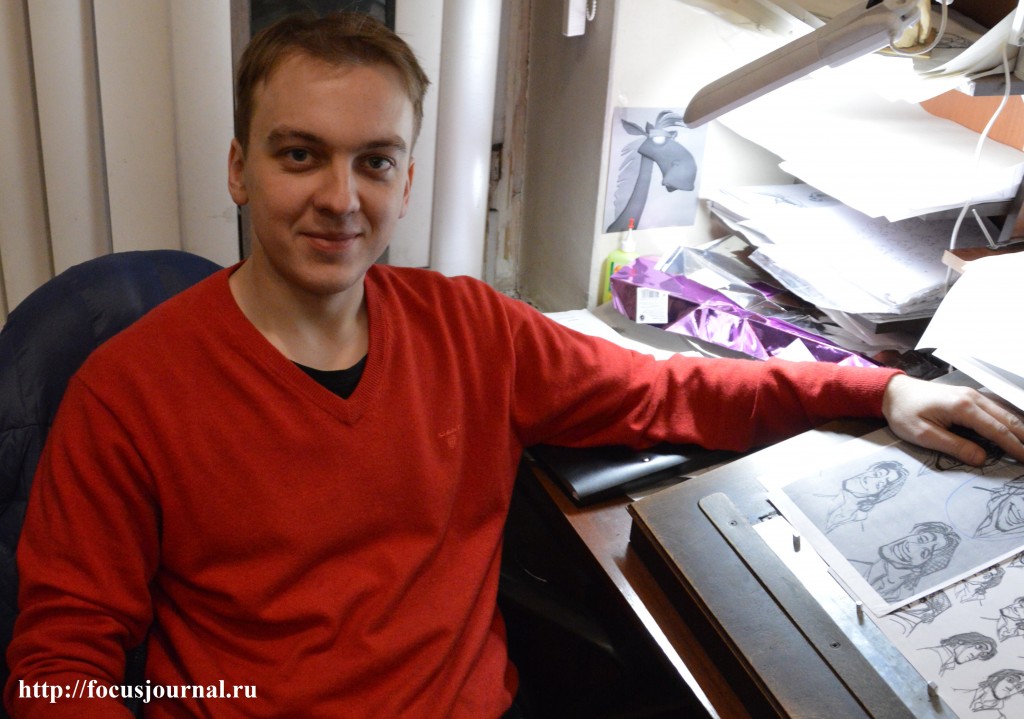
— Did anyone ever finish the course but fail to get a job?
Genadzi: One girl made it all the way to the final assignments, but she worked very slowly and fell behind the schedule, so she was dropped from the course. Another girl left after two months because she realized animation wasn’t for her. People who have never worked in animation think cartoons are fun, easy and amusing. In reality, it’s hard, repetitive work. For example, I once spent an entire month working on a scene that lasted just two seconds on screen. A whole month of your life for two seconds! Unlike live-action filmmaking, editing is an unaffordable luxury in animation. The editing decisions are built into the storyboard stage; cutting together finished, fully animated material is wasteful. Every single frame represents an enormous amount of work. Animation is an extremely labor-intensive and expensive undertaking. Cutting out a piece of finished animation is like throwing a suitcase full of money out into the street — and throwing away a piece of the lives of the people who spent their time creating it.
— Which projects have you had a chance to work on during your year and a half at Melnitsa?

Genadzi: The Three Bogatyrs on Distant Shores, Ivan Tsarevich and the Grey Wolf, The Fortress and Urfin Jus (projects in development — Editor’s note).
Andrey: The Three Bogatyrs on Distant Shores, and the 3D projects The Barboskins and Luntik. By the way, Luntik recently broke all records for the number of views…
Genadzi: But children don’t ask you for autographs or recognize you… They don’t recognize Andrey as the animator behind Pupsеn.
Andrey: Film actors have it easier. They appear in a film and everyone recognizes them. Nobody knows the animators, because hardly anyone stays to watch the credits. Animators are actors nobody ever sees — and, as a result, nobody knows.
Genadzi: The invisible fighters on the animation front…
— Did you both draw as children? Did you attend art clubs or art school?
Genadzi: I used to draw comics as a child and even made animation using a vinyl record, but I never thought I’d make a career out of it. I only started considering it, as I said, during my final years at university. And I didn’t make my first animated film until five or six years after graduating from the Academy. I hardly knew anything about animation at the time.
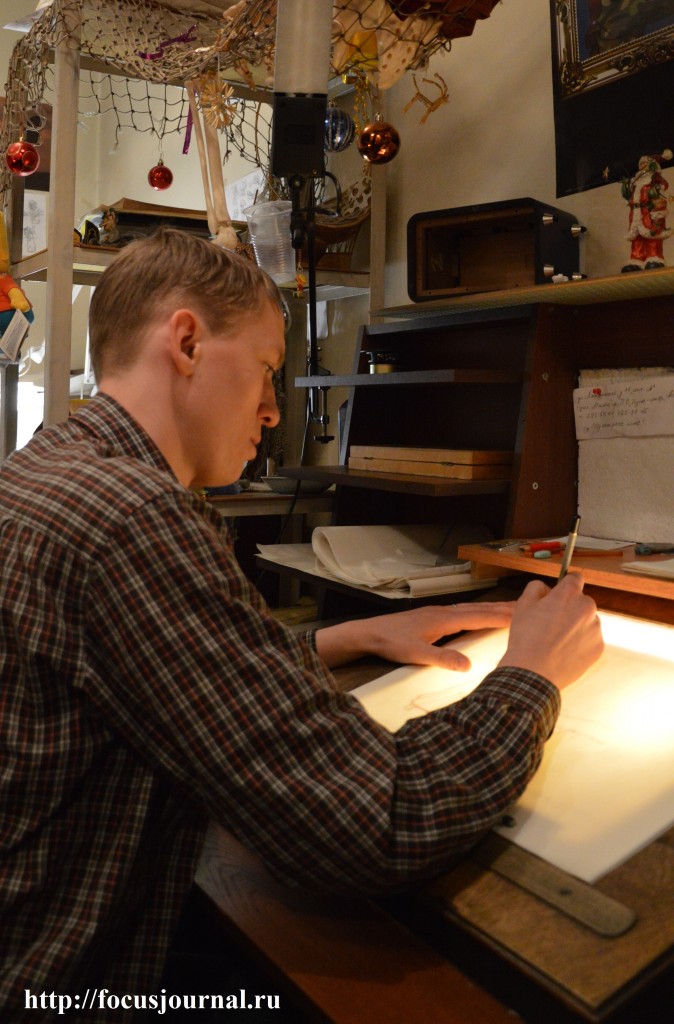
Andrey: I’ve always drawn on my own, and my parents were always supportive. But where I lived, there wasn’t really an art school. Well, there was one, technically, but in practice it was just a club for girls where they drank tea and painted flowers. It wasn’t an art school at all; it was more like an extension of kindergarten, somewhere parents could send their children to keep them occupied and out of trouble in the apartment blocks. Around that time, Viktor Pavlovich Arapov, a real artist, arrived from Kazan and decided to shake things up. He started pressuring the administration to create proper conditions for studying and drew up his own curriculum to genuinely prepare students for art college entrance exams. But nobody was interested, and his attempt to improve things came to nothing. I found out where he lived, went to see him and asked him to take me on as a student. He was the one who introduced me to the world of art. Viktor Pavlovich seemed like a rather unusual person to me. He could be teaching a painting lesson and suddenly start reading poetry… I was used to hanging out with kids my own age — pulling someone’s pigtail or getting into a fight — and here I was, visiting a man who read poetry and talked about beautiful things. It opened up a whole new world for me! Thanks to studying with Viktor Pavlovich, I got into art college. After that, things went as I’ve already described. Having watched Genadzi take off, I’m now thinking about creating my own project. I’m developing my skills and reading textbooks on storyboarding and screenwriting.
— Could you tell us a little more about those breakthroughs?
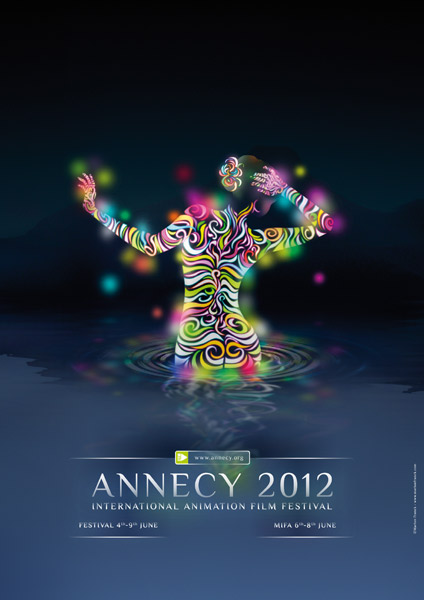
Genadzi: I didn’t exactly take off — I’ve been flying high since childhood (laughs). From an early age, I drew, wrote little books, made films — I was always creating something. My main animated film and my animation debut was Lollipop, a social horror film. I took it to the Suzdal Festival (the annual Open Russian Festival of Animated Film, held in Suzdal since 1996 — Editor’s note), where it won an award in the Best Applied Animation category. Last year, my music video for the band Kerri, for their song “Milaya” (“Sweetheart”), got off to a good start, and I decided to try submitting it to a number of festivals. The real breakthrough came when the video was selected for the international festival in Annecy, France, in the summer of 2012 (the Annecy International Animation Film Festival is the world’s largest animation festival, often called the “Cannes of animation,” where the best animators from around the world gather — Editor’s note). It was amazing to have the opportunity to take part in the festival, although I didn’t win any awards. After the opening ceremony, barbecue parties were held every evening with some of the biggest studios — the Olympus of animation — including Disney and Stuttgart Films (Germany). Animators gathered there and talked. The closing ceremony was attended by stars of the international animation world, although unfortunately I wouldn’t have recognized them by sight. It was an unforgettable feeling to realize that I, a newcomer, was part of the animation elite.
— Coming back to the profession, what’s the most important quality an animator needs?
Genadzi: The first and most important thing is to love animation. Otherwise, there’s no point even trying to do it. The second is patience — a great deal of patience. And, as in any profession, you need to keep developing, improving and learning new things.
Andrey: I think the most important qualities are attentiveness and a keen eye. No matter how patient you are, you won’t get anywhere if you don’t look around, observe things and notice the little details. Everything that ends up on paper comes from the world around us.
— And what’s the hardest part? Do you get very tired during the day?
Andrey: It’s not like working on an iPhone assembly line, where you get up from your seat and you’re fired (laughs). You can get up, take a break and have some tea.
Genadzi: My eyes do get tired when I’m drawing on animation paper, but it’s nothing compared with working on a computer — that tires your eyes much more! I work on a computer at home, and before joining Melnitsa I used to spend entire days and nights at one. I came to hate it so much that I’m now delighted to be working on paper.
Andrey: Besides, you often have to run over to the director for approval or visit other departments, so you get at least a little exercise. Although sometimes you get so absorbed in a scene that you don’t get up for ages. Then you walk home in the evening with Pupsens and Luntiks swarming around in your head. Fortunately, they don’t haunt my dreams. But sometimes an idea comes to you at home, and you think: “Oh, I’ll go into the studio tomorrow and do it this way!”
— What are the prospects for the future of animation?
Andrey: Given the realities of life in Russia, animation has two possible paths. Either you make commercials, which everyone hates — animators and audiences alike — but which are the only things that pay, or you find a way to make ends meet, somehow find the time and money, and create your own projects. But you have to take into account what people are actually willing to buy and sell. Unfortunately, that’s how things are.
Genadzi: In Europe, there are grants, and you can find sponsors who are interested in the field. In Russia, there aren’t many options. In very rare cases, you can get a government grant if you propose a project on a socially significant subject, but there are very few examples of that. It’s tough for Russian animation.
— And finally, is animation a profitable business at all?
Andrey: At Disney, I suppose it is.
Genadzi: If you want to make money, you should become a sales manager (laughs). Animation is more of a labor of love, especially at the beginning. Be prepared for financial difficulties, because animators are paid by the piece: you get paid for however much you draw. We’re not exactly struggling, of course, but your earnings depend on a great many factors and personal priorities. You can churn out mediocre animation, do hack work, and make good money quickly, but you may end up dissatisfied with what you’ve produced. The important thing is to find a balance. You constantly have to choose between making more money and getting personal satisfaction from your work.