
Director Genadzi Buto
The Citycelebrity editorial team got in touch with the winner of the “Music Videos” category, a new addition to the METERS Short Film and Animation Festival, and asked him about the future of cinema, inspiration and animation.
How did your career as a director begin?
My career as a director began at the same time as my work in animation. I conceived and created most of my projects myself, and I consider this an essential point.
My debut animation project was a music video for the band Anonimka, set to their song “Panthers”. It was a first attempt, but not a complete failure. I worked intuitively. It was the first time I really felt what it meant to be a director. That experience prompted me to learn more about the art of directing and to improve my work by understanding what I was doing.
Why do you favour animation over other forms of filmmaking?
I came to it gradually, and it was only about five to seven years ago that I clearly realised I was an animator. I like video as well, and I see it as another medium through which I can express myself and in which I intend to work. But animation comes first. It simply makes it possible to perform a miracle: to bring a drawing to life and give it another dimension. The real world isn’t static, after all — it’s constantly moving, evolving and making sounds. Once I had tried animating, I realised I would never go back to static drawings.
Where do your most interesting ideas come from?
You have to understand that nothing simply falls from the sky. For a great idea to suddenly strike you, you need to be constantly working things through in your mind. You have to carry it with you for a long time, nurture it and let it grow, sometimes for months or even years, until you’re one hundred per cent sure that this is it — exactly what you need. That’s when the famous “inspiration” arrives.
Even then, you need to take a break and look at the idea with fresh eyes. Although perhaps a fresh, critical perspective isn’t always the best thing either. I prefer to look for ideas when I’m out walking alone. Images of places from my own life come to mind, places that inspire me. I mentally transport myself there and look for ideas in those places.
You have to search within yourself, rather than borrow from films or things you’ve seen recently. That gives you a better chance of finding something original, distinctive and profound. You need to withdraw into solitude and immerse yourself in a particular state of mind. I feel I still haven’t created my truly definitive work. Hopefully, it’s still ahead of me.
Which of your works is your favourite, and which was the most difficult to make?
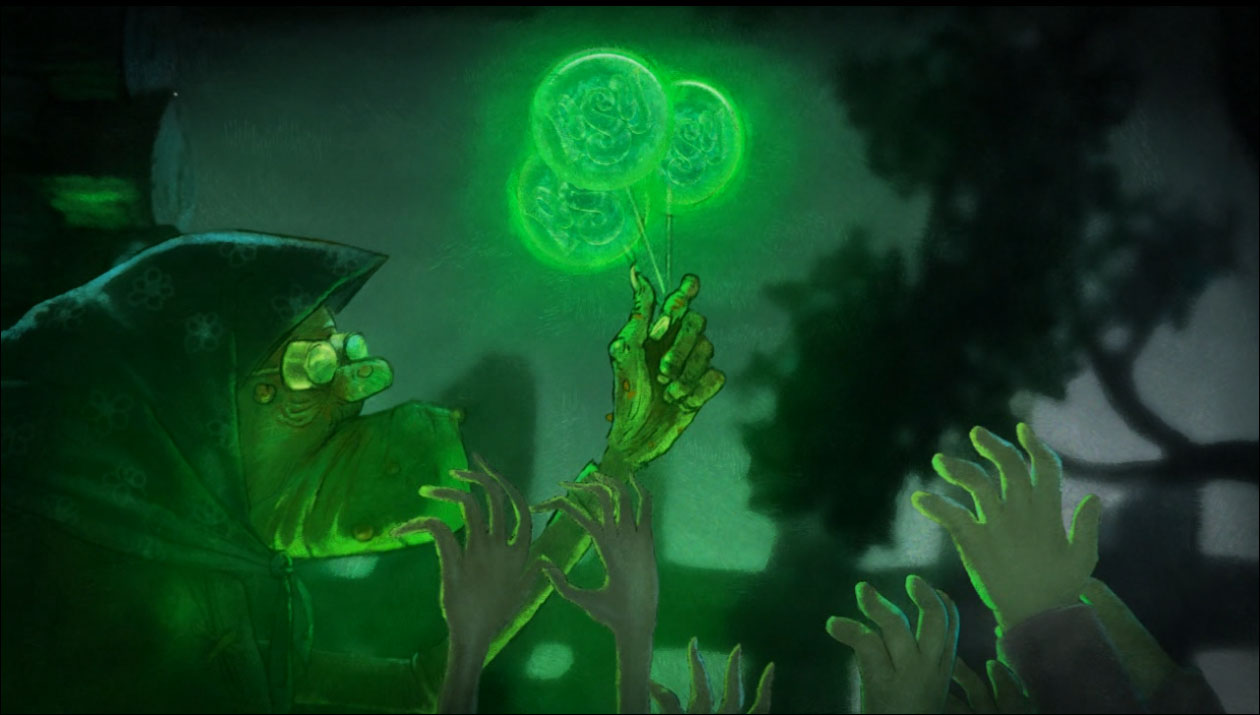
My favourite work is the animated short Lollipop. For me, it was also my debut in short-form filmmaking. And although, almost three years later, I can already see its flaws, it remains a significant work for me. I think that, in a way, it also marked out the direction I would like to pursue for the time being.
They say all directors are a little crazy. Do you agree?
Show me a normal person, then. I think that person would be the first patient. Some people simply hide their eccentricities better than others. And then there are people who are natural performers and present their quirks more attractively. That’s what sets them apart from ordinary people.
Do you think a good director needs a specialised education, or can their educational background be in any field?
I once asked a student in a film directing programme the very same question. The gist of his answer was that all you need to do is read some slim book on directing theory; everything else should be innate. All that’s left is to acquire the cultural knowledge and experience that you’ll be gathering throughout your life. Then you’ll have the potential to become a director.
What’s important is knowing what you have to say to the world, and ideally, it should be something entirely new.
What do you think cinema will look like in the future?
I think it will be closely tied to rapid technological progress. It seems to me that people are still playing around with gadgets and are so delighted by all the new possibilities that have suddenly opened up to them. As a result, they’re simply having fun with these tools, forgetting what’s most important: art in its purest form.
But everything passes eventually. Once people have had their fill of this “frills and gimmicks”, they’ll have to find new ways to surprise audiences. I don’t know where those ways will come from, but I’m sure something will turn up.