
The Creator of the Horror Short “Lollipop” Presents His Work in Grodno
On January 4, residents of Grodno got to discover the animation of Genadzi Buto. The artist lived and studied in Grodno and now works at a studio in St. Petersburg. Genadzi considers Grodno his hometown, so he was happy to accept an invitation to present his animated work to the people of the city.
“Children under 12 should watch only with their parents”
At the beginning of the screening, one of the audience members shared her experience:
“I’ve seen ‘Lollipop’ — it’s absolutely terrifying.”
Genadzi Buto created the animated horror film “Lollipop” as one of the episodes of Re-animation, an anti-drug series for teenagers. It is a tragic story about a person who disappears as a result of drug addiction. The film conveys its meaning through carefully chosen images. No words are needed here: every detail, movement and action speaks of what matters most. The music, specially composed by Bruno Letort, creates a uniquely chilling atmosphere.
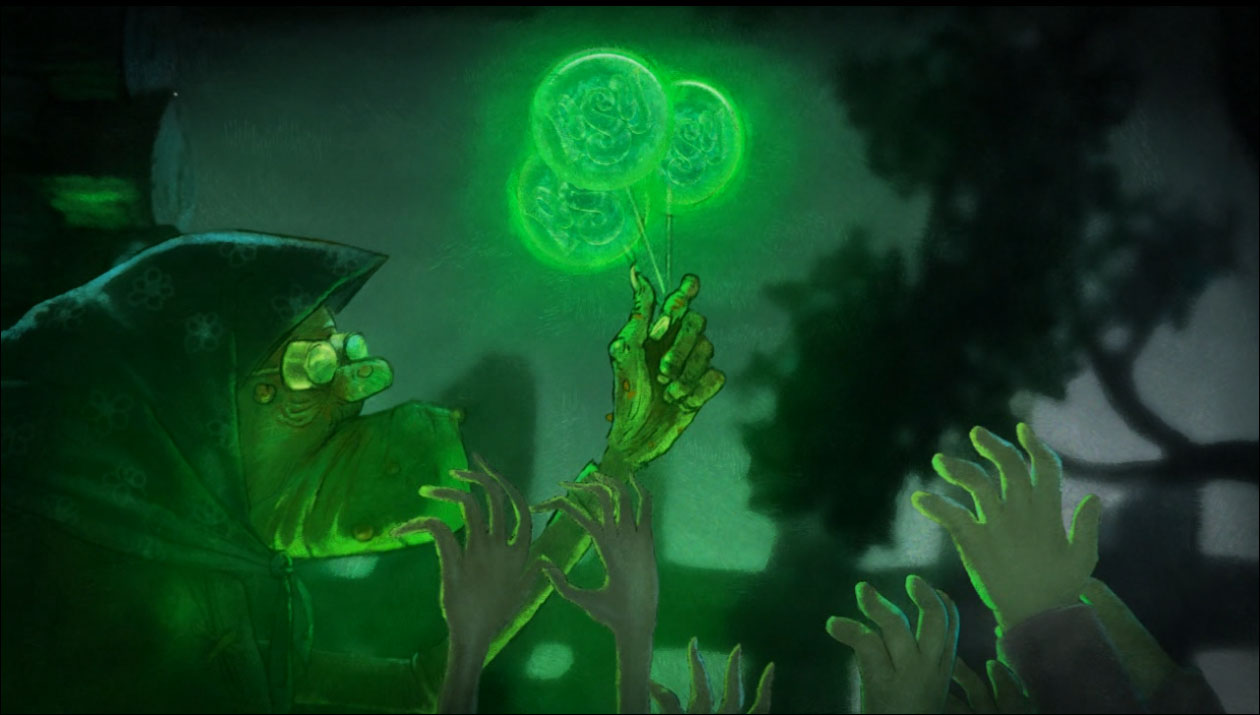
Genadzi explained that after one screening, a girl in the audience felt unwell, and he was inundated with complaints. Following that incident, an age restriction had to be introduced: “Children under 12 should watch only with their parents.”
How It All Began
Genadzi Buto was born in Minsk but lived and studied in Grodno. He graduated from the Academy of Arts with a degree in industrial design. During his final year of study, he became interested in animation. That was when he decided to become an animator.
His first major project was the music video “Panters” for the Belarusian band Anonymka. The band describes its style as “children’s punk rock.” The video follows a little girl and her friend, a car that doubles as an orchestra, as they travel around the Earth and meet its inhabitants. Childlike, playful and unusual imagery, an abundance of details and little touches, and a dynamic storyline reveal the secret of how all living things can coexist in peace and harmony.
Genadzi mainly works with cut-out computer animation (2D animation). But, as he says, he is always looking to broaden his experience. After the cut-out 2D video “Everything’s Gonna F…k Up!” for the well-known Russian band Barto, he went on to create a 3D video for their song “Dance Floor”. Barto operates at the intersection of electroclash and electro-punk. The band uses electronic sounds from the 1990s and fills its lyrics with profanity, underpinned by a distinct sense of irony and social commentary. During screenings of their videos, underage audience members had to be asked to leave. As it turned out, animation is not just “cartoons for children.”
Buto created some of his works to enter competitions. According to the animator, this has its advantages. First, a deadline helps an artist focus and get down to work. Second, competitions often impose unusual conditions. For example, the project “Brainless Johnny” required him to combine three seemingly unrelated things: seven years, yawning and rebirth. Third, there is the financial incentive, which certainly helps.
“Brainless Johnny” is a traditional hand-drawn animation film created for the Graphic Animation Competition in Australia, organised by the Sydney Opera House.
Something Anyone Can Do
Observing the world around us can also become an interesting creative project. For two years, Genadzi Buto photographed the view from his window. He took 500 pictures using the camera of an ordinary Sony Ericsson K750i mobile phone. The animator edited the photographs into a video sequence and added music. That was how the stop-motion project “Panoramia” came about. Ordinary things we see every day can take on an entirely new, philosophical meaning.
“I Am a Belarusian Animator”
The animation screening by Genadzi Buto concluded with a presentation of his new music video, “Sweetheart”), for the Moscow-based band Carrie. But that wasn’t the evening’s final treat. The audience finally had a chance to let off steam during a conversation with the animator. They bombarded Genadzi with questions: which country’s animator does he consider himself to be? What kind of music does he listen to? What inspires him? What is the animation scene like in Belarus, and why did he leave for St. Petersburg?
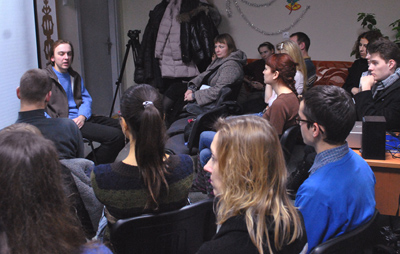
Most of Genadzi Buto’s works have received awards in Russia, but he considers himself a Belarusian animator and a native of Grodno. Today, Genadzi works at the Melnitsa studio in St. Petersburg. In his free time, he continues to work on projects commissioned in Belarus.
In general, Genadzi says, animation is a versatile profession. You can create animation wherever you live — whether in a world capital or in the middle of a forest. He went to St. Petersburg not to settle there, but to work: to gain new experience and develop professionally, and to acquire things that are impossible to find in Belarus.
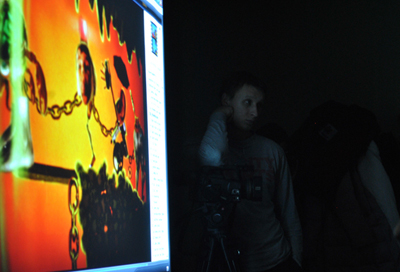
Genadzi is also happy to take on commercial projects, including television commercials. Creative projects and music videos for friends bring him less financial reward than artistic satisfaction. He finds inspiration in simple things: observing the world around him, music, autumn and solitude. Belarus, the animator says, offers very favourable conditions for creativity.