
Artist and director Genadzi Buto: Boundaries Are Shifting
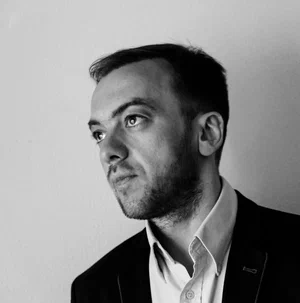
We have prepared a series of interviews with participants in the Belarusian programme of the 8th Unfiltered Cinema Festival. According to the jury and the audience vote, the winner was Genadzi Buto’s film Too Big Drawing. We spoke with the artist, director and animator about boundaries, war, the place of contemporary independent artistic statements — and, of course, whether it is worth going into cryosleep now.
Could you tell us more about what happened to Too Big Drawing after it was completed? What are its main achievements?
So far, it has been selected for 52 festival programmes, including contemporary art exhibitions. It has received around 12 awards of one kind or another at these festivals. Some of them were quite prestigious, such as the 60th Ann Arbor Film Festival, the 23rd Buenos Aires International Independent Film Festival, the 39th Busan International Short Film Festival, and others.
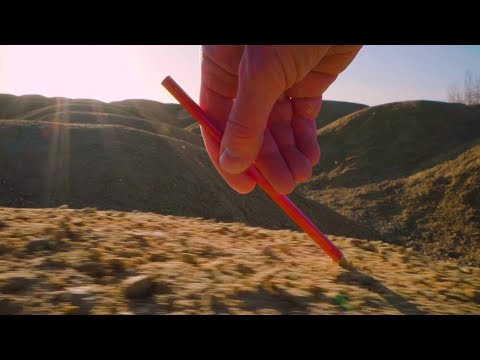
In Too Big Drawing, the pencil goes beyond the boundaries of the white sheet of paper. How can we define boundaries?
I believe that the ultimate task of any artist is to feel out the boundaries of art — boundaries that, in essence, reveal its nature and its very essence, exposing what has not been said and what remains invisible. An artist tests these boundaries, challenges their limits, and provokes debate and their reconsideration. Boundaries shift.
The sad thing is that, over the previous century, our predecessors worked so hard in this direction that it now seems difficult to find any boundaries left — everything has been broken and refuted. On the other hand, life itself presents us with new contexts: the digital age, the internet, virtual reality, and other things our predecessors did not have.
By its very nature, art should be revolutionary. I also strive for this in my work, although not consciously. The work itself, as it emerges spontaneously, dictates its own terms to me, rather than the other way around.

To what extent can war, as a context that tears apart the boundaries of the world (of peaceful life), enrich human consciousness compared with art?
“When the guns speak, the Muses fall silent.” Of course, art cannot compare in its impact with such radical events of reality as war. But that does not mean it is useless. Art is part of culture, which in fact shapes our identity — the very identity for which nations go to war against one another. One could say that culture itself is the cause of this war: a clash between two cultures, two ideologies. Art is not some strange, idealistic thing detached from human beings, existing in some higher celestial dimensions. It is a by-product of human mental activity, present in every sphere of human life — social, political, religious, and so on — including war.
Through art, people try to bring order to and make sense of all the chaos of the terrible, boundless events taking place around them, events that have destroyed their familiar world. Through it, they try to reconcile their human nature with the inhuman, cruel abyss of the physical world.
Art is created during wartime, too. It can take the form of uplifting music with national motifs, music videos, clips, and even humorous video sketches filmed by soldiers themselves on the front line. But a deeper understanding and processing of what has happened will come only after the war.
What prospects do independent films have in the age of digital cinema, streaming platforms, and the popularity of YouTube and TikTok?
I think streaming platforms may make short films monetisable, which was always a problem until ten or fifteen years ago. By definition, a short film could not generate revenue because it was an inconvenient format for both cinemas and television. Independent short films were essentially a festival-only subject.
I think the same applies to independent feature films, although a feature can be distributed in cinemas. It all depends on how well-known the director and the film are, as well as on promotion.
We are now in an era of short-form content and ultra-short video formats, which can be monetised in various ways. In recent years, I have noticed a trend: some festivals are being created purely around their own streaming platforms, as a way of acquiring content. Since they do not have a traditional festival programme limited by time, they can accept huge numbers of films. They then look at the number of views and promise to reward the most popular entries somehow. The rest might receive a few pennies depending on their view counts.
A great many such platforms are appearing now. They all make promises, but I am sceptical about the whole thing. I doubt you will get even a couple of cents out of them. And I am not keen on simply giving my work away and doing charity. Large, well-known platforms might be worth considering, though.
On the one hand, this democratisation and decentralisation of mass media is a good thing for creators. On the other hand, so many platforms have appeared that the information space is overloaded with content. It is physically impossible to consume even a small fraction of it, let alone make your own work stand out — especially if it does not fit the formats of popular mainstream genres.
For example, with my experimental work, I do not even count on that. I do not really pin my hopes on festivals either, since most of them are geared towards the tastes of a mass audience. However, streaming platforms might help people like me find viewers with specific preferences in a narrow niche, and that is a positive aspect.
I believe that streaming platforms are certainly useful for distributing independent, unconventional cinema, but I doubt they can bring in any meaningful amount of money, simply because such films will always have fewer viewers and views. So we end up back where we started: those who are popular make money, regardless of the medium.
That is why I believe that, as before, these kinds of hubs — festivals and programmes that curate films through expert selection, bring together the most valuable works according to their own concepts and audiences, and present them to viewers in a convenient, ready-made package — will continue to matter.
Suppose you had the opportunity to make a film with a virtually unlimited budget. What kind of film would it be, and what would it be about?
First of all, I would bring to life the dozens of short films whose ideas have been accumulating in my mind over many years.
I would also probably make my first feature film. I have started thinking about what it might be about. Given that I am currently reading a lot about Belarusian history and following the current international political situation, I would ambitiously — perhaps even recklessly — attempt a historical epic about the Grand Duchy of Lithuania, strange as that may sound.
In my opinion, we lack contemporary historical cinema on the level of the Polish film With Fire and Sword, something that would address the question of Belarusian national identity. We could choose an episode from the Lithuanian–Muscovite wars.
It could even be an animated film.
And the final question, which we ask all participants in the Belarusian programme of Unfiltered Cinema: Would you go into cryosleep? If so, for how many years? And if not, why not?
I probably would, but only once there was nothing left to keep me in my own time — for example, if my close relatives had passed away, or if I had completely lost interest in the modern world.
I think I would like to wake up in a hundred years, although a thousand years would also be fine, provided humanity still exists, of course.