The beginning of Genadzi Buto’s creative journey as an experimental animator can be traced back to Panoramia (2011). Of course, it is worth looking a little further back and noting that the visual choices and themes of his earlier works were clearly leading him towards experimentation. This is particularly true of the mischievous music videos for the bands Barto and Karrie. In fact, Panoramia might well have been the young animator’s first and last attempt at experimentation. That same year, in 2011, Genadzi left Minsk and completed a traditional animation course at the Melnitsa studio. With a degree in industrial design, he finally became a professional animator.
Panoramia consists of a continuous sequence of photographs. What unites them is the view from a single window; what distinguishes them is the time of day and the changing seasons. The narrative emerges from the technical approach. At first, the photographs simply replace one another, but then they seem to bleed into each other: a fragment of winter appears within the summer panorama, and so on. An accelerated chronotope brings the separate parts together into a whole, and suddenly, for a few brief moments, a new and unique space emerges.
The director begins to engage more intensively with experimentation a few years later, in 2016. Genadzi Buto’s attendance at two different schools of contemporary art lays the groundwork for his theory. His first deliberate experiment is 283 Frogs, part of the Dead Animation series. In this work, each individual frame is a photograph of a dead frog, which evokes mixed feelings. But when played together at high speed, the images merge into a single Frankenstein-like frog that suddenly comes to life. 283 Frogs is a vivid demonstration of the very essence of animation: without movement, the frames are nothing more than a collection of dead photographs. Whether this contains a hidden reference to Stan Brakhage’s Mothlight (1963), in which plants and butterfly wings were attached directly to film stock, is for the viewer to decide.
Alongside Dead Animation, another series, Black Video, was launched in 2016. In The Mark, the director tests the viewer’s patience with a black screen; in Imprints, he explores visual persistence. It was once through optical effects of this very kind, such as those Genadzi Buto employs in these works, that the pioneers of animation created the first optical toys. In time, this led to the emergence of animation and cinema.
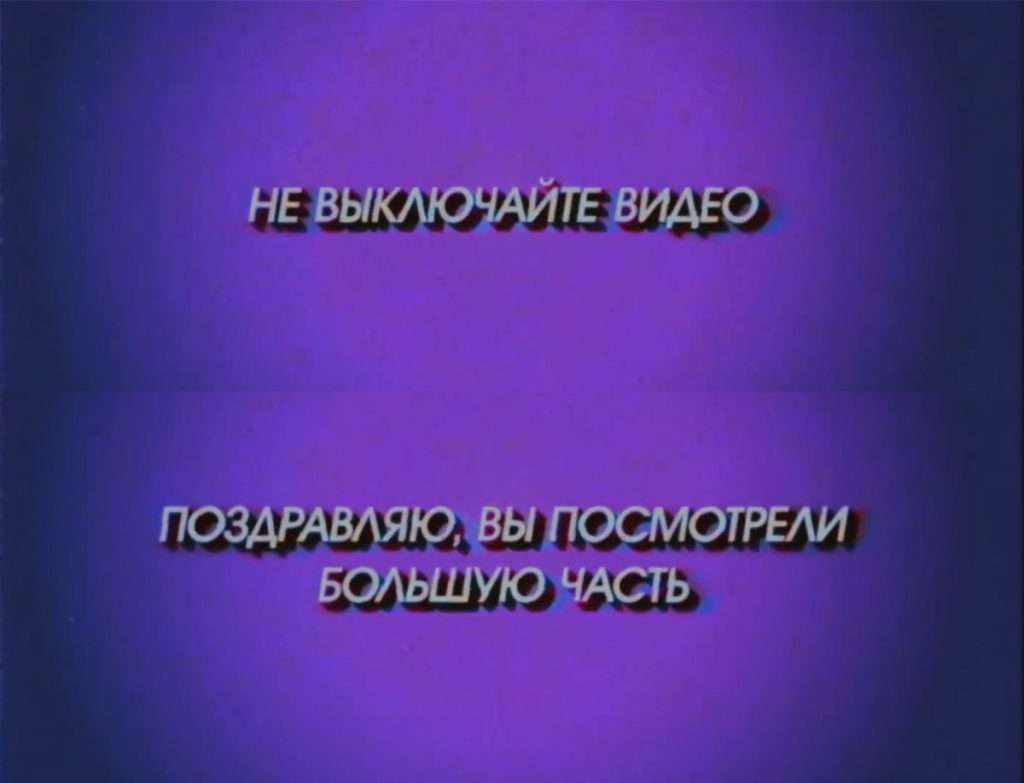
In 2020–2021, the thematic focus of Genadzi Buto’s work shifted towards the digital. Time, once its central theme, moved deeper into the underlying meaning of his works. In Compression. Swan Lake, the analogue past is compressed into uniform pixels, making us almost physically feel the passage from one era to another. Meanwhile, Videoseance No. 1, an example of perfect post-irony, does everything in its power to persuade the viewer to spend their time watching the film all the way to the end.
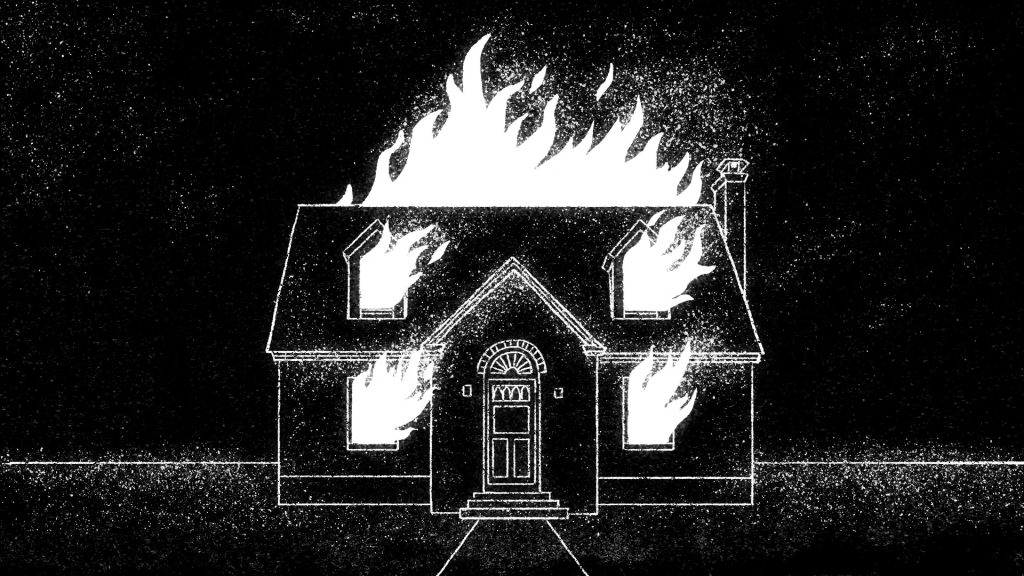
The experiment’s close scrutiny extended beyond pixels to frames and polygons — all the basic elements of animated existence. In One Night Somewhere, movement is restricted to just two frames. This binary structure reinforces the minimalism and black-and-white aesthetic. The repetition of scenes, accelerated action and other simple techniques convey the feeling of a meaningless tragedy both effectively and strikingly. The same can be said of the dead-end evolution of the “primitives” — animated three-dimensional figures in the 2021 film of the same name.
Too Big Drawing (2021) is a remarkable blend of documentary, visual art and animation. Its simple composition and narrative make for an enjoyable viewing experience while prompting the audience to reflect on its meaning.
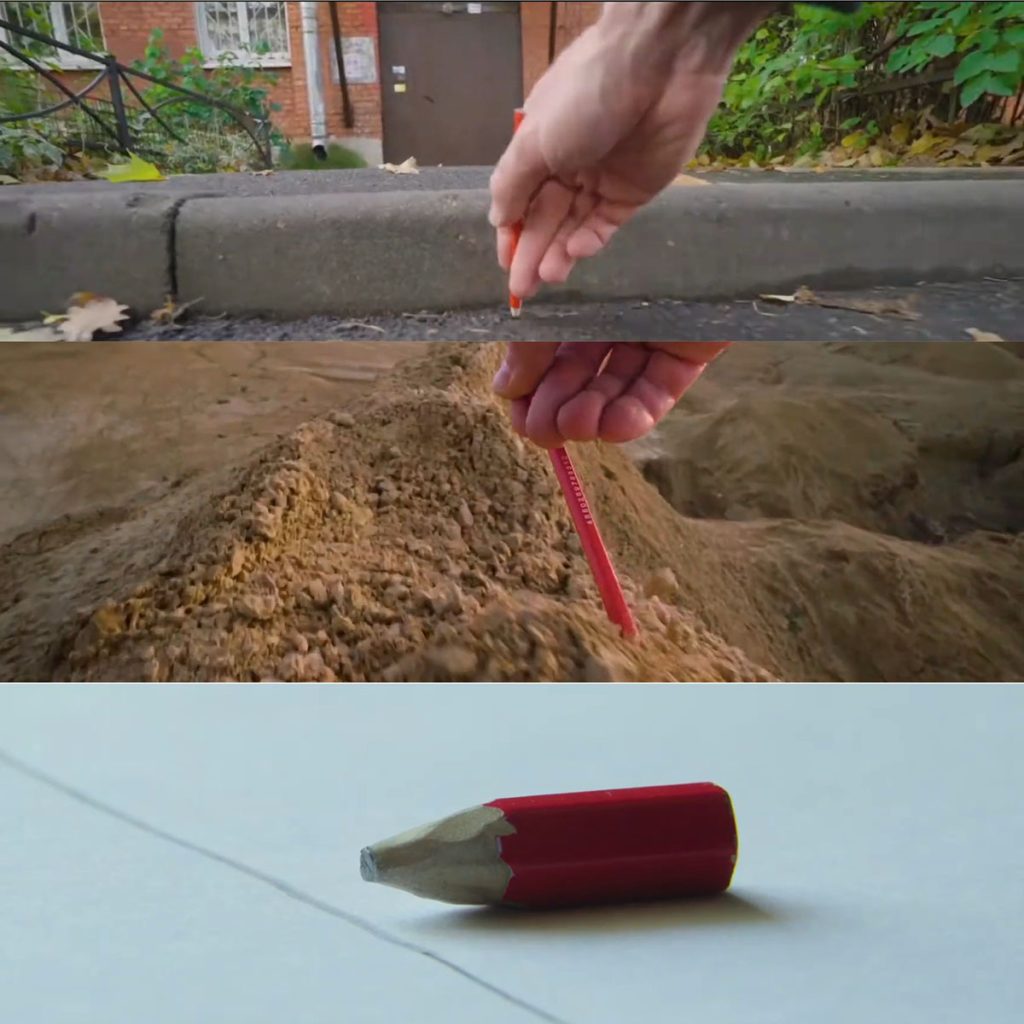
Like all the travelling heroes of fairy tales, the protagonist of Too Big Drawing has a compelling reason to complete his endless drawing. To do so, he draws a line with a pencil, day and night, across land and along the seabed. Naturally, what unfolds on screen should not be taken literally. But before calling it a metaphor for creativity or a struggle against conventions, it is worth giving the film’s concept some thought.
In fact, the author invites us to believe in the existence of a certain shape that no one will ever see. We, the viewers, are merely witnesses to the birth of a line, its journey and progression, and its eventual reunion with its starting point — a union that opens onto a symbolic Infinity. The whole thing is painfully reminiscent of human life.
The succession of locations suggests that the hand holding the pencil could have travelled all the way around the globe. If we assume that the shape the protagonist is drawing is a circle, then the journey takes on a sacred meaning, because the circle and the line are the geometry of Eternity, forever biting its own tail. Worn down to a stub, the pencil returns to the starting point and completes a perfectly straight line so seamlessly that the point where the two ends meet cannot be found. This suggests that the entire journey may have been imaginary, and the obstacles overcome along the way merely invented — just as one would expect in cinema’s great illusion.
Experimental animation offers no clearly defined conclusions. The essence of an experiment is to identify a tendency and give the viewer something to think about, rather than present a ready-made answer. In all fairness, we should point out that the interpretations of Genadzi Buto’s films offered above are just one possible reading. After watching them, every viewer has the right — and even the responsibility — to offer their own interpretation of what they have seen. There is no secret ingredient in experimental animation. It is simply destined to remain a source of new ideas, and even if not many years have passed since an experiment was made, it can always be reinterpreted.
All that remains to say in closing is this: watch experimental animation, and never stop thinking.