
Genadzi Buto: “Most animators are enthusiasts…”
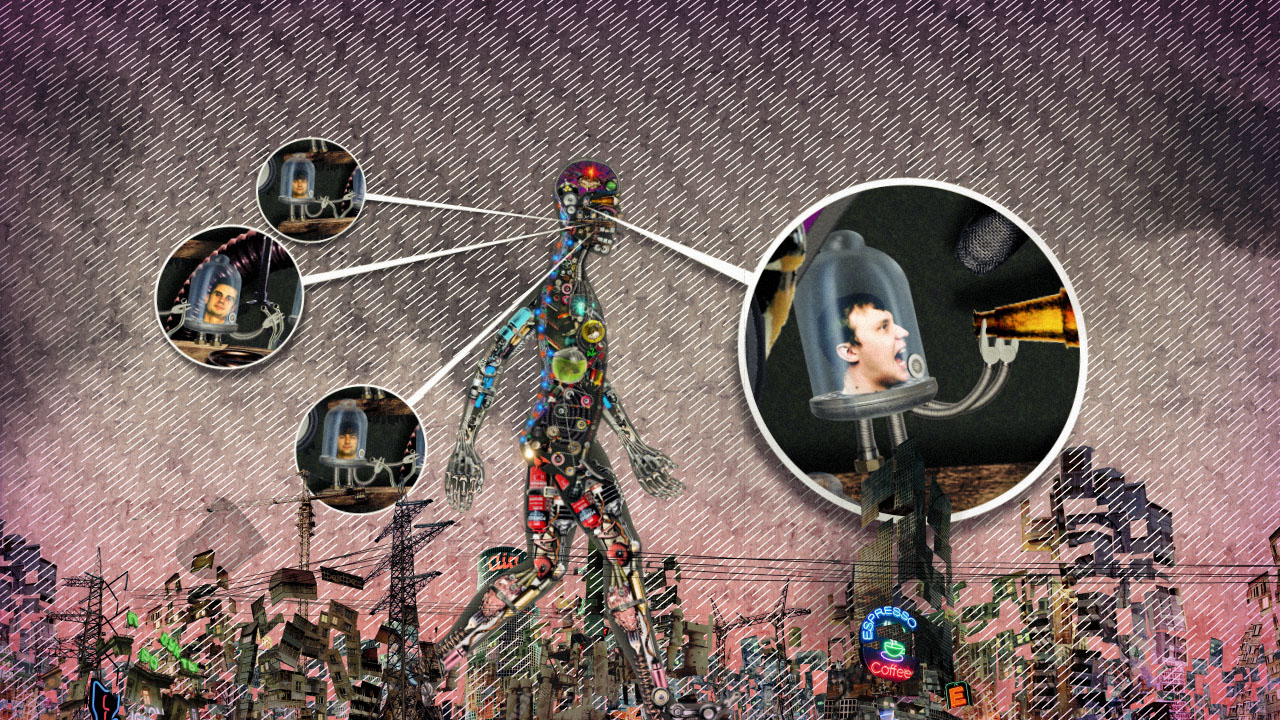
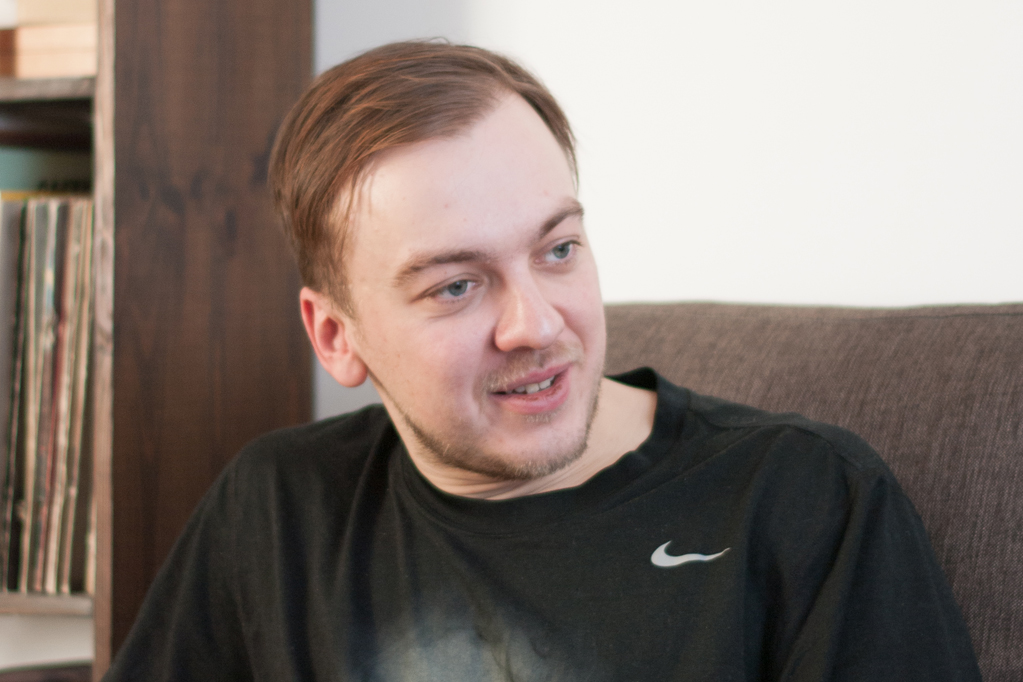
When we were looking for someone to feature in our “Creative Journey” column, we immediately thought of animator Genadzi BUTO. Interviewing him for our first issue felt particularly symbolic. First, Gena was the person who introduced the magazine’s co-founders to each other. Second, he embodies the kind of creative people our magazine is intended for: someone with an academic background who has made creativity his profession. At the same time, Genadzi Buto’s own example shows that it is possible to succeed without specialised training—in this case, in animation and directing.
On education and a love of animation
Gena, you graduated from the Industrial Design Department of the Belarusian State Academy of Arts, but you never worked in your chosen field. When did you realise you needed to pursue a different direction?
Even before I enrolled (laughs). Back then, the word “design” sounded fashionable, progressive and exciting. But I understood that it wasn’t fine art, it wasn’t painting. New things always spark interest at first: you explore them, get carried away, immerse yourself in them… And I managed to convince myself that I was a real industrial designer. But the further I went, the more I realised that I had an inner conflict with industrial design. I kept drifting off in different directions—into animation one moment, painting the next. While studying, I did freelance work and started making short videos. By the time I was approaching graduation, I realised that I didn’t want to be a designer and that my graduation project would be my last project connected with industrial design.
That’s why the project turned out to be such a hybrid. It combined industrial design and animation, since the presentation itself was animated. It was a media show bus: a transforming bus that unfolded into a concert venue and was entirely covered in LED screens displaying animation, advertising and other content.
How did your love of animation begin? How did you get into it?
I became interested in animation when I got my first computer. I started learning Photoshop, then moved on to 3ds Max, which was very popular at the time (I switched to Maya fairly quickly). And that’s when I discovered that you could use cameras, set up lighting—actual filmmaking! I realised that I was drawn to all of it: shooting, controlling cameras. I had also always dreamed of making films. And I still have that dream: to own a camera and make my own films, not necessarily animation.
Usually, people move in the opposite direction, towards 3D animation…
First of all, I was simply doing 3D and considered myself a 3D animator. Then I realised there were plenty of technical specialists around who could do it just as well. I also understood that I couldn’t go for long without drawing.
I believe that if you have a particular ability, you should make use of it rather than bury it. So if I have a gift for drawing, I simply can’t leave it unused.
Secondly, 3D animation had become widespread and even fashionable, and I’ve never been particularly fond of popular trends. So I decided to move into 2D animation. I also like its graphic quality and unconventional nature. In that respect, 2D offers more possibilities; it can take many different forms. 3D animation, by contrast, tends to look rather similar from one project to another.
What does animation mean to you?
I don’t see animation as cartoons for children, but as the art of bringing graphics to life. It is visual art that acquires the dimension of time: instead of remaining static, it develops over time. That, to me, is animation.
Animation is a craft, an extremely labour-intensive one. Unlike other forms of visual art, you simply can’t cut corners. For example, you can’t get the proportions of a human figure wrong, or turn a 3D character’s head in a way that contradicts its anatomy. Any shortcuts will show immediately.
Animation has its limitations, of course, but there is a reason people say that animation is limited only by the creator’s imagination. It can do so much more, even things that are impossible in live-action cinema. In most cases, the limitations are technical. They can also come from the budget or from the client behind the animator.
Take cut-out animation, for example. You can’t rotate a character freely around its axis or move the camera above it in the way you can in 3D. On the other hand, you can create very detailed textures, as in The Adventures of Captain Vrungel. Traditional animation has its own limitations too: the camera cannot move freely through a three-dimensional drawn space, and complex textures are difficult to produce. That’s why characters often have to be kept relatively simple, so that the frames can be drawn quickly. Otherwise, you could spend a month producing just one second of animation, which simply isn’t practical. The animator’s main task is to make all these limitations work within a particular visual style and turn them into an advantage.
But this freedom in animation comes at a price: enormous amounts of work and a great deal of your life. From the outside, it all looks like fun and seems easy, but in reality it involves a tremendous amount of labour.
In that respect, I envy musicians. They can release an album with many songs, and at least one of them is bound to catch on. Animation doesn’t work that way. You can spend several years making a single film and still have no idea whether anyone will be interested in it. You can devote a large part of your life to a film that never becomes known at all…
Could you give our readers an idea of how long it takes to make an animated film?
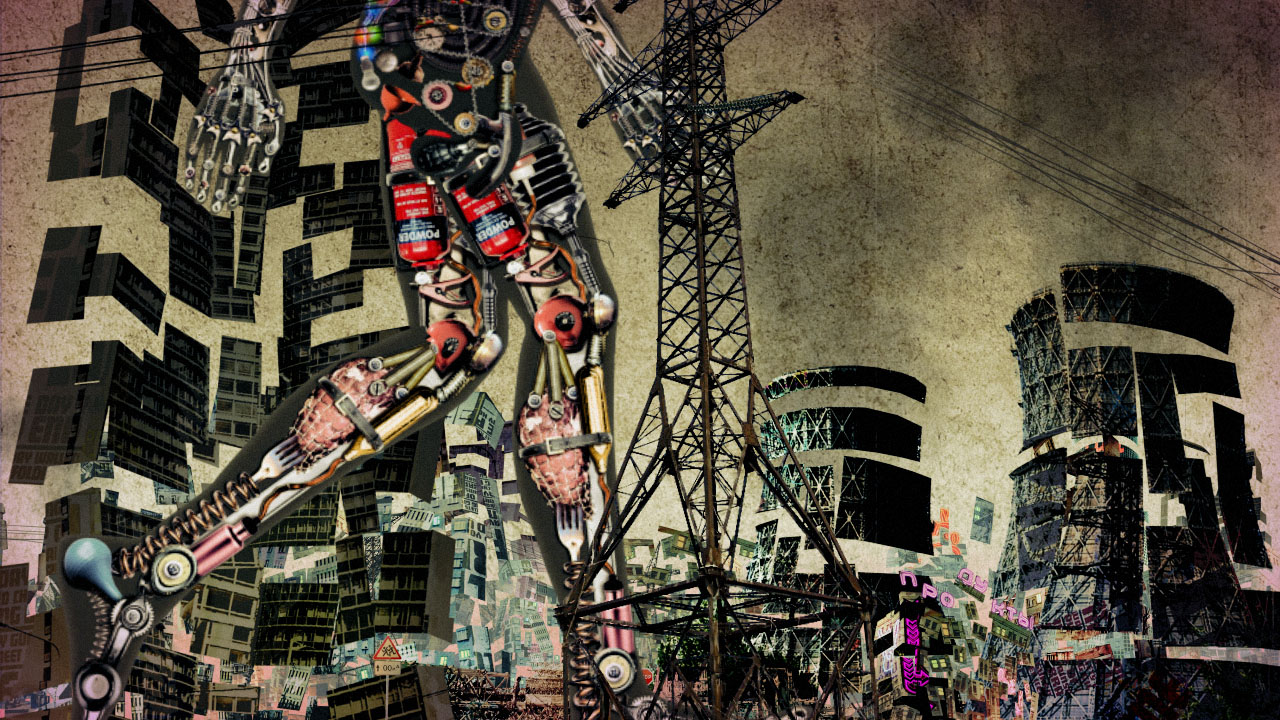
Well, one second consists of 24 or 25 frames. With traditional animation, you have to draw 24 or 25 images for every second, all connected to form a single movement. But drawing the images is only part of the process. It’s an incredibly painstaking job in which everything has to be worked out in detail.
First, the screenwriter plans what happens in the scene. Then the storyboard artist creates the storyboard. The layout artist works out where the character will be positioned. The animator draws the rough animation. Next, the inbetweener creates the in-between drawings. Someone traces the outlines, then comes the colouring, followed by shadows and backgrounds. The compositor puts everything together with the background. After that come special effects and editing. One person writes the dialogue, another composes the music, and someone else creates the sound effects.
A single animated film can contain many thousands of frames. Cut-out animation is somewhat simpler in this respect.
Many people dream of becoming animators, artists or designers, imagining that these professions consist entirely of creativity. Is that not quite how it works?
Every profession, even one that looks glamorous from the outside, involves an enormous amount of work. If someone has achieved success, it doesn’t mean it came easily. Most likely, they worked hard for many years.
Of course, there are exceptions. Some people are talented and happen to find themselves in the right place at the right time, when society is ready for what they do. They create something for themselves, and it turns out to be fashionable, something people enjoy watching or listening to. That happens when your tastes coincide with those of a wider audience.
I think it all comes down to sincerity: when you do what you genuinely want to do, and what you create appeals to a lot of people, that’s when you become popular.
On working in St Petersburg and freelancing
You spent quite a long time working independently in Minsk. Why did you decide to move to St Petersburg?
I realised that I could go on making small animation projects like that indefinitely without getting anywhere. I wanted to experience the actual production process behind a full-length 2D animated film. That’s how I started working at the Melnitsa studio.
Besides, by then 2D animation was hardly being made anywhere in the world. Even Disney had closed its traditional animation department. And yet in Russia, where animation was practically on its last legs, they were still making it—and producing feature-length animated films at that. What a paradox!
I decided this was a unique opportunity to try my hand at traditional animation, not on a computer but on animation paper—proper old-school work. I wanted to go through the whole process and gain that experience. Even having a line on my biography or CV saying that I had worked on a full-length 2D animated film would give me a different standing as an animator. And, of course, there was the practical experience. After all, the best film school is hands-on experience.
When and why did you leave Melnitsa?
At the end of my second year at Melnitsa, in October 2013, I resigned and left St Petersburg. I was offered a project that I’m still working on today. I had to leave because it was impossible to combine my studio job with working on that project.
But I didn’t want to leave—not least because of the team. And that is precisely the biggest downside of working alone: a certain degree of social isolation.
Since we’re talking about working outside a studio, tell us what it’s like to work independently. You had already done that before joining Melnitsa.
Like anything else, it has its advantages and disadvantages. The main advantage is that everyone envies us (laughs). People think a freelancer is free, that nobody exploits them and that they can do whatever they want.
But you have to be highly self-motivated and organised to avoid giving in to laziness and the temptations of having free time, and to keep yourself from procrastinating.
In general, I think working in the same place for too long is harmful for anyone. You can reach a crisis point: you stop developing, and it becomes psychologically difficult as well. For example, you may start expecting more from your employer than they can offer. The employee becomes dissatisfied, a conflict develops, and eventually they hit a ceiling within the company.
But a lot depends on the individual and on how often they feel the need to change things in their life and try something different. In my case, it’s a necessity.
So, what do you prefer: freelancing or working in an office?
Being my own boss. I don’t like being exploited… Freelancing is difficult for me because there are no people around to work with. That’s its biggest disadvantage for me.
Are you a Belarusian animator?
Yes, of course. I have a Belarusian passport, and people in Russia have always seen me as Belarusian too. They would say: “Oh, Gena? He’s Belarusian.”
On current projects, interests and future plans
What are you working on now?
I’m making a new animated film for the Re-animation project. It deals with anti-drug awareness, but when you think about it, the subject isn’t as narrow as it might seem. It can be interpreted from many different angles. After all, addiction isn’t limited to drugs. I approach it very broadly in this project—as dependence on anything whatsoever.
Basically, I’m turning a commissioned project into an auteur film. And it’s rather dark again, although the subject itself is hardly cheerful. I like psychedelic aesthetics and horror films, but, to be honest, I’m getting a little tired of that. I think my future projects will take a more positive, perhaps even absurdist, direction.
What are your plans? Are you thinking of returning to St Petersburg?
Probably not anymore. I feel I’ve spent enough time there (smiles). Although I can’t say I’ve explored the city perfectly. In St Petersburg, you have to dig around and look: behind the façades of buildings there are all sorts of interesting little streets, loft spaces and shops.
I want to try something else. Life is short, and the world is enormous. I’d like to travel. To decide where to live, you need to compare different places, and I don’t think I’ve been to very many.
How do you approach planning your work and your life?
I believe it’s essential to make plans. Of course, you can take a chance and rely on improvisation, hoping that something will work out, but that’s not very effective.
You need to imagine where you would like to be in five years’ time and plan every step towards that goal, perhaps even setting monthly targets. Otherwise, time will pass very quickly.
The main difficulty is deciding WHAT to plan. At least, that’s how it is for me, because I still don’t know exactly what I want to do… And it doesn’t necessarily have to be animation. I’d like to move away from it a little and broaden the scope of my work. I feel drawn to other forms of visual art as well, particularly things related to animation, such as video.
What does your daily routine look like?
It’s organised in such a way that I sacrifice everything else for work. There are plenty of distractions, especially the Internet, so I’ve developed a routine: I get up in the morning and don’t go online.
If I do go online to check my email, I set a timer. I keep looking at the clock, and when my allotted minutes are up, I count “one, two, three” and switch the Internet off.
I’m very careful with it because I know how easily you can lose control and your sense of time. So I treat the Internet as a reward. Finish some work, then reward yourself with 10–15 minutes online.
Of course, I sometimes slip up. I come across something interesting, and I can’t stop until I’ve finished reading the article.
What are your interests besides animation?
Music, visual art, design, literature… I also run and go to the gym. I think that if I didn’t exercise, I’d literally fall apart.
First, it gets your blood circulating and stimulates the production of endorphins, the so-called happiness hormones. Second, you need to prepare for old age—or, more precisely, fight against it.
Who supports you?
My parents, first and foremost. At a certain point, when I started receiving awards, they began taking my work seriously.
I also get a lot of support from people who write to me personally to say how much my films have impressed or inspired them. Especially when you’re feeling down, messages like that really lift your spirits and give you a much-needed boost.
Advice from a talented person
Can someone without specialised education work in this field?
Yes, absolutely. I work in animation without having received any specialised training in it. And if you want to become an animation director, you don’t even have to be able to draw.
Someone without an art degree or other specialised education, but with a feel for movement and a cinematic instinct, can work as a director or in 3D animation.
How can you acquire specialised knowledge?
These days, thanks to the Internet, that’s no problem at all. You can access knowledge that you won’t necessarily get even on directing or screenwriting courses.
You can find useful resources and books from all over the world online, and access them whenever you want. The main thing, of course, is to know English, because 80 per cent of the most useful information is in English, and far from everything gets translated into Russian.
There is an overwhelming amount of information available. But none of it will teach you anything without practice. Practice is the best way to learn.
Genadzi Buto’s recommendation: I recommend the animation bible, Richard Williams’s book The Animator’s Survival Kit. It’s available online in translation, along with video lessons. An invaluable book.
As I’ve already said, nothing beats practice. You simply have to get started and do it. But first of all, you need to be absolutely sure that this is really what you want: how interested you are in it, and whether it matches your desires, abilities and opportunities.
Some people get excited about something and start working on it, but after a while their enthusiasm fades and they lose interest.
Animation is not for people who lack patience. As animator Fyodor Khitruk once put it, an animator is someone with an iron backside (laughs).
And if, after giving it some thought, a person realises that animation is their field, then they’re practically doomed, because they won’t be able to do anything other than animation. Most true animators are enthusiasts who keep doing it despite all the difficulties—with money, work and working conditions. They hate it, quit it again and again, but always come back.
How do you find your path?
That’s the hardest question. First and foremost, you have to listen to yourself. If you’re doing something and feel uncomfortable, you need to move away from it. In other words, you should do what you enjoy.
My father and I once disagreed about how one should approach work. He said that a job should provide enough money to live properly, not merely exist, and that work doesn’t always have to be enjoyable.
I disagreed. I believe work should bring you both satisfaction and money.
Why spend your life doing things you don’t enjoy? You have to work long and hard in your chosen field until it starts supporting you. It may be difficult, but then, who has it easy these days?